Heavy metals are the contaminant that even a well-made supplement can't fully design out. Botanicals draw lead, arsenic, cadmium, and mercury up from soil and water, so they arrive in the raw material — which makes measuring them, against the right limit, a core part of releasing a safe product.
The four elements that matter most
Regulatory frameworks converge on the same four toxic elements — often called the "big four" and classified as Class 1 elemental impurities under ICH Q3D: lead (Pb), arsenic (As), cadmium (Cd), and mercury (Hg). For dietary supplements specifically, U.S. Pharmacopeia chapter <2232> sets the limits (with <233>specifying the ICP-based procedures), expressed as permitted daily exposures (PDEs):
- Lead (Pb) — 5 µg/day
- Arsenic (inorganic) — 15 µg/day
- Cadmium (Cd) — 5 µg/day
- Mercury — 15 µg/day total (methylmercury 2 µg/day)
(The drug chapter <232> allows a higher oral mercury limit of 30 µg/day; the dietary-supplement chapter <2232> is the stricter, product-appropriate reference.)
Why California Prop 65 usually sets the real bar
For any product sold in California, the binding constraint is frequently not the compendial limit but Proposition 65. Its safe-harbor level for lead — the Maximum Allowable Dose Level for reproductive toxicity — is just 0.5 µg/day. That is an order of magnitude below the USP daily limit, and it is the threshold behind most supplement warning letters and settlements. Whichever number is lowest is the one a product actually has to meet:
Figure
Daily lead-exposure benchmarks (µg/day)
Values in µg of lead per day
Dietary-lead benchmark under FDA's Closer to Zero plan (2.2 µg/day for children).
Compendial daily limit for lead in dietary supplements.
~10× below the USP limit — the threshold behind most Prop 65 warnings.
Different frameworks, different purposes — but for a product sold in California, the lowest applicable limit governs. These are daily-intake benchmarks, not concentrations.
Source: USP <2232>; FDA interim reference levels (Closer to Zero); California OEHHA Prop 65 safe-harbor levels.
How the measurement is done: ICP-MS
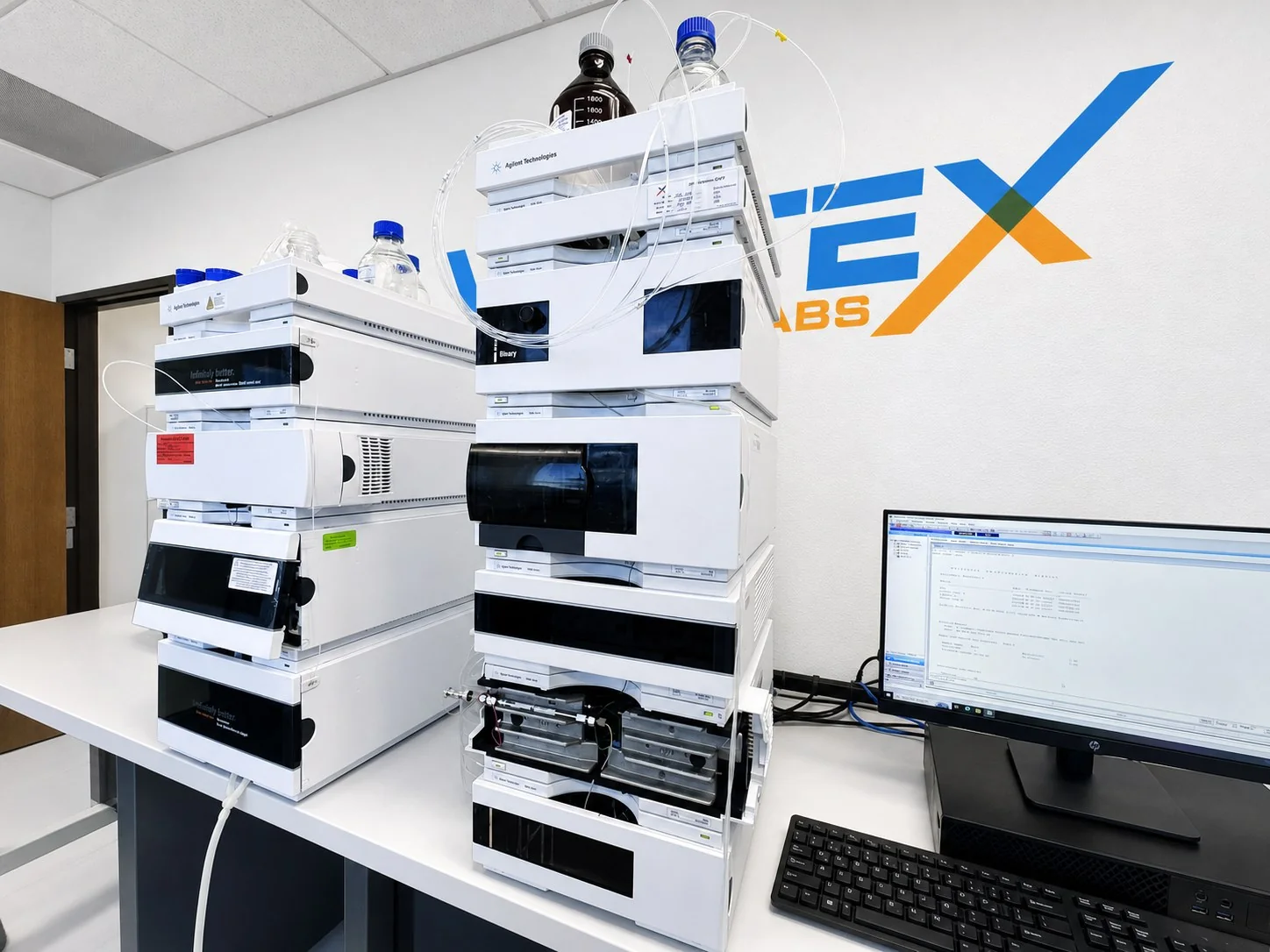
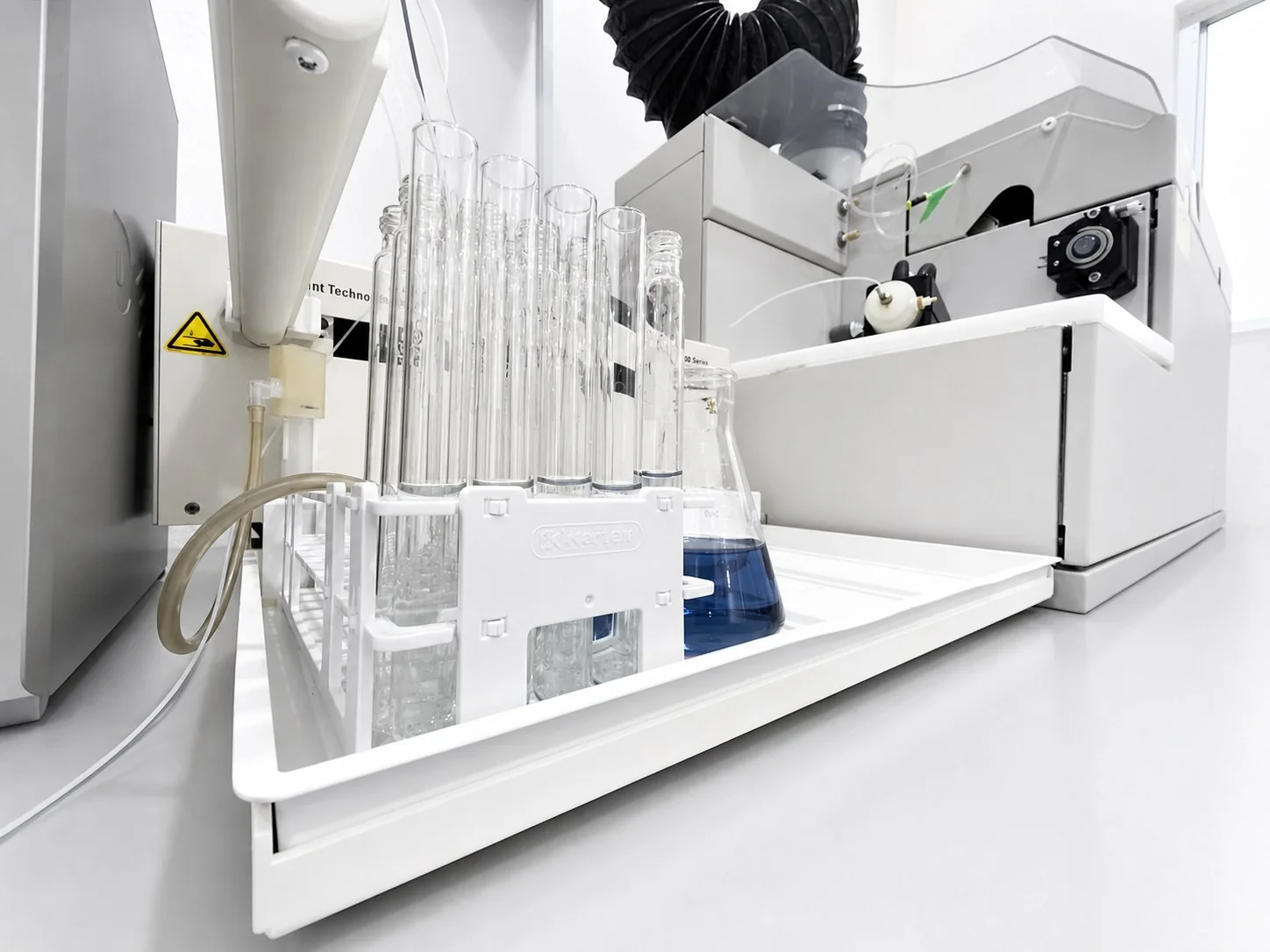
Meeting sub-microgram limits requires a technique that sees vanishingly small amounts. Inductively coupled plasma mass spectrometry (ICP-MS) ionizes a digested sample in an argon plasma and counts ions by mass, reaching parts-per-billion and lower. The workflow matters as much as the instrument:
- Microwave acid digestion fully dissolves the matrix so every trace of metal is in solution and countable.
- Speciation by LC-ICP-MS separates the far more toxic inorganic arsenic from benign organic forms — a total-arsenic number alone can over- or under-state real risk.
- Interference control and validated QC — internal standards, spike recoveries, and reference materials — keep results defensible at trace levels.
Where contamination comes from
Because these metals enter through the raw material, risk tracks the ingredient. Root and rhizome botanicals, leafy greens, cacao, rice-derived ingredients, and clays or minerals tend to carry more. That's why testing at incoming raw material, not only finished product, is the efficient place to catch a problem — and why supplier qualification leans on elemental data.
Test against the strictest applicable limit
Build your specification around the lowest limit your product must meet — often Prop 65 for the California market — and verify it by ICP-MS with arsenic speciation. Passing USP but failing Prop 65 is still a market problem.
References
- 1.USP-NF — General Chapter <2232> Elemental Contaminants in Dietary Supplements
- 2.ICH — Q3D Elemental Impurities (Quality Guidelines)
- 3.California OEHHA — Prop 65 NSRLs & MADLs (safe-harbor levels)
- 4.FDA — Lead in Food and Foodwares (Closer to Zero)
Educational content. Regulatory limits and methods referenced are current at time of writing; confirm the applicable standard for your product and market.